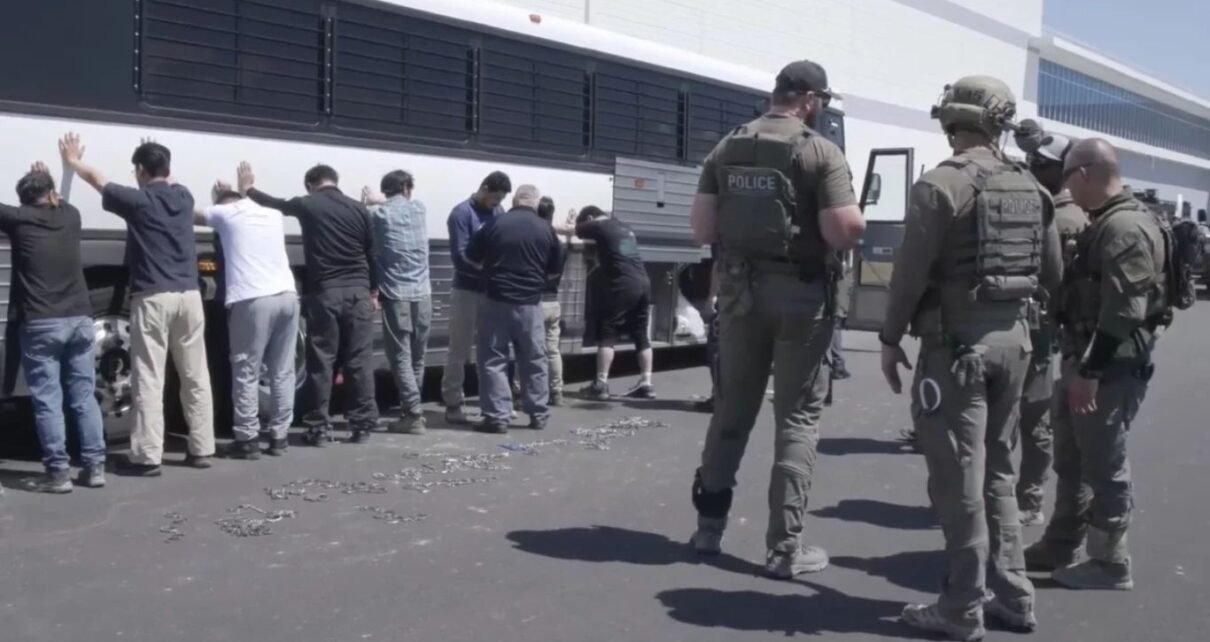
In a dramatic development that underscores the intersection of international labor, immigration enforcement, and diplomacy, South Korea has secured an agreement with the United States for the release and repatriation of more than 300 South Korean workers detained during a high-profile immigration raid at a Hyundai–LG Energy Solution electric vehicle (EV) battery plant under construction in Georgia.
The Incident: Immigration Raid at Hyundai–LG Plant in Georgia
What Happened?
Earlier this month, U.S. Immigration and Customs Enforcement (ICE) conducted a massive immigration enforcement operation at the Hyundai–LG battery facility in Ellabell, Georgia. This plant, part of a multibillion-dollar investment into America’s EV future, had become a hub of global labor and supply chain operations.
As part of the raid:
- Approximately 475 workers were detained, including over 300 South Korean nationals.
- The majority were alleged to be working without proper authorization, with visa overstays or violations cited.
- Many of the detainees were reportedly on B-1/B-2 visitor visas, which do not allow for employment.
The incident drew widespread attention not just due to its scale, but also because it involved workers from a close U.S. ally and occurred at a strategic industrial site.
South Korea’s Immediate Reaction
The South Korean government responded with urgency and seriousness:
- President Lee Jae Myung directed government ministries to protect the rights of detained citizens.
- A rapid-response diplomatic team was dispatched to Georgia to coordinate with local and federal authorities.
- The Ministry of Foreign Affairs called for a full explanation from U.S. counterparts and demanded humane treatment of the workers.
These actions reflected growing concern in Seoul that the raid could threaten both citizen welfare and bilateral economic partnerships.
3. The Negotiation: Behind Closed Doors
Following several days of high-level talks between U.S. State Department officials and South Korean diplomats:
- A formal agreement was reached to allow the release and repatriation of the detained workers.
- South Korea will organize chartered flights to bring its nationals home as early as next week.
- The U.S. has agreed to expedite the administrative processes required for deportation and return.
- South Korea has committed to reviewing the visa application processes that led to the situation.
This marks a rare diplomatic compromise in immigration enforcement cases, especially one involving such a large group of foreign nationals.
Broader Context: U.S.–South Korea Economic Ties
The EV battery plant is part of a strategic alliance between the U.S. and South Korea, focusing on:
- Strengthening supply chains for electric vehicles and semiconductors.
- Reducing dependency on China for critical components.
- Creating thousands of jobs in both countries.
Hyundai and LG Energy Solution’s joint venture in Georgia is projected to employ over 8,000 workers and represents an investment of more than $4 billion. The use of skilled foreign workers during early construction and ramp-up phases is not uncommon in global projects of this scale.
The incident, however, has raised important questions about:
- How foreign labor is vetted and brought into the U.S.
- The role of third-party contractors in hiring and visa compliance.
- Whether visa categories like B-1 (business visitors) are being misused or misunderstood in industrial contexts.
Visa and Immigration Complexity
This case has spotlighted challenges in the U.S. immigration system, especially regarding:
Types of Visas Allegedly Misused
| Visa Type | Intended Use | Alleged Misuse |
|---|---|---|
| B-1 | Short-term business (meetings, conferences) | Workers allegedly performed manual labor at a construction site |
| B-2 | Tourism, leisure travel | Some individuals reportedly worked on site |
| H-2B | Temporary non-agricultural work | Not issued in this case, but would have been more appropriate |
| L-1 | Intra-company transferee | Not used but often applies to multinationals like Hyundai |
The distinction between legal entry and legal employment authorization remains crucial. Simply entering the country on a valid visa does not automatically permit one to work.
Human Rights and Legal Concerns
In the days following the raid, South Korea raised concerns over:
- Detention conditions of its nationals, including reports of inadequate legal representation and language barriers.
- Physical treatment during the raid, including reports of shackling and strip-searches.
- Due process, as many detainees were unfamiliar with U.S. legal procedures or their rights under immigration law.
South Korean consular officials were granted access to the detention facilities, and legal aid was provided in coordination with local Korean-American community organizations.
Repatriation Plan and Next Steps
With the deal now in place, the next phase involves logistics and safe return:
- Chartered aircraft arranged by the South Korean government will begin returning workers in batches.
- Workers will not be prosecuted criminally, though their U.S. visas may be revoked.
- Many will face entry bans to the U.S. for periods ranging from 3 to 10 years, depending on the length of overstay and other factors.
The South Korean Ministry of Justice has also signaled it may conduct its own investigation into how workers were recruited and sent to the U.S.
Table: Timeline of Key Events
| Date | Event |
|---|---|
| Early September 2025 | U.S. ICE conducts raid at Hyundai–LG battery plant in Georgia |
| Day 1–2 | Over 475 workers detained; 300+ are South Korean nationals |
| Day 3 | South Korea dispatches emergency diplomatic team |
| Day 4 | Bilateral negotiations begin behind closed doors |
| Day 6 | Deal reached for release and repatriation of workers |
| Day 7+ | Charter flights scheduled; legal and administrative proceedings continue |
Reactions from Both Governments
South Korea:
- Celebrated the swift resolution as a win for diplomacy and citizen protection.
- Emphasized the need for legal reform to prevent future incidents.
- Commended U.S. cooperation, but warned that such disruptions could affect business confidence.
United States:
- Maintained that the raid was conducted lawfully and based on evidence.
- Reiterated the importance of protecting domestic labor laws.
- Expressed willingness to engage diplomatically, while not apologizing for the enforcement action.
What This Means for Global Investors
For multinational corporations operating in the U.S., the incident raises major questions about:
- Compliance with immigration laws, even when subcontracting labor.
- Clarity around visa requirements for short- and long-term employees.
- Risk management when sending foreign nationals into highly regulated labor environments.
For Korean investors and firms, the event underscores the importance of:
- Stronger vetting and documentation of international workers.
- Working with U.S.-based legal teams before deployment.
- Coordinating with consular offices in advance of major labor assignments.
Expert Opinions: Policy and Perception
Some immigration experts argue that:
- Enforcement actions are becoming more aggressive, especially near political election cycles.
- Ambiguity in visa categories like B-1 or B-2 leaves room for misinterpretation and exploitation.
- The burden of compliance often falls unfairly on individual workers rather than corporations or recruiters.
Others note that:
- This case could become a landmark moment for clarifying the legal frameworks around global labor deployment.
- More countries may now demand pre-clearance and accountability before allowing their citizens to work abroad.
Summary Table: Key Takeaways
| Category | Detail |
|---|---|
| Number of Detainees | 475 total; over 300 South Koreans |
| Location | Hyundai–LG Battery Plant, Georgia |
| Alleged Violations | Visa overstays, unauthorized work |
| South Korea’s Response | Diplomatic pressure, consular access, chartered flights |
| U.S. Position | Immigration law enforcement, no criminal charges filed |
| Deal Outcome | Workers to be released and repatriated |
| Broader Impact | Visa reform discussions, business risk awareness |
SEO Optimization Notes
This article includes SEO-targeted terms such as:
- South Korea US deal release workers Georgia
- Hyundai Georgia plant raid
- South Korean workers detained
- U.S.–Korea immigration crisis
- Repatriation of foreign workers
- Immigration enforcement diplomacy
- Georgia factory visa violations
The structure of this article—clear headings, keyword-rich summaries, and structured tables—boosts scannability for readers and search engines alike.
Conclusion
The agreement between South Korea and the United States to release and repatriate detained workers from a Georgia factory marks a pivotal moment in both international diplomacy and immigration policy.
It serves as:
- A reminder of the complexities surrounding global labor mobility,
- A cautionary tale for multinational operations,
- And a model for how countries can resolve disputes through cooperation, not confrontation.
As the workers return home and the dust settles, both nations are likely to reflect on how to balance economic integration with legal enforcement in the age of global workforces.